Freecoaster vs Cassette Hubs: Which Should You Choose
Choosing the Right Hub for a BMX Bike: A Global Perspective
Selecting the right hub for a BMX bike shapes the way riders move, react, and enjoy their time on the bike. Riders across North America, Europe, Asia, and other regions often debate whether a freecoaster or a cassette hub suits them better. This choice affects trick execution, comfort, and long-term progress, which is why many take time to understand the strengths of each option. Understanding the global BMX history helps put these technical decisions into perspective, as every pedal stroke and every rotation has its own character depending on the hub installed.
Quick Overview
- A cassette hub offers fast engagement, lighter weight, and strong responsiveness.
- A freecoaster hub allows backward rolling without pedal movement, giving riders more freedom during fakie tricks.
- Park, dirt jump, and race riders often prefer the firm response of a cassette hub.
- Street and technical riders around the world appreciate the smooth backward movement of a freecoaster.
- Price, maintenance needs, and personal riding style all play big roles in the final choice.
How Hub Characteristics Influence Riding
The difference between a freecoaster and a cassette hub may look small from the outside. Yet this detail affects trick flow, acceleration, and balance in noticeable ways. Riders who train in busy urban environments, large skateparks, or dirt courses across the globe rely on the right hub setup to match their riding goals. For those looking for new challenges, exploring top global BMX spots can inspire new riding styles and equipment choices.
A cassette hub connects instantly when the rider pedals forward. This makes acceleration sharp and precise. A freecoaster, on the other hand, allows backward rolling without forcing the pedals to turn. Riders practicing fakies, especially in Asian and European street scenes, find this feature particularly helpful because it reduces fatigue and gives more control.
Understanding the Cassette Hub
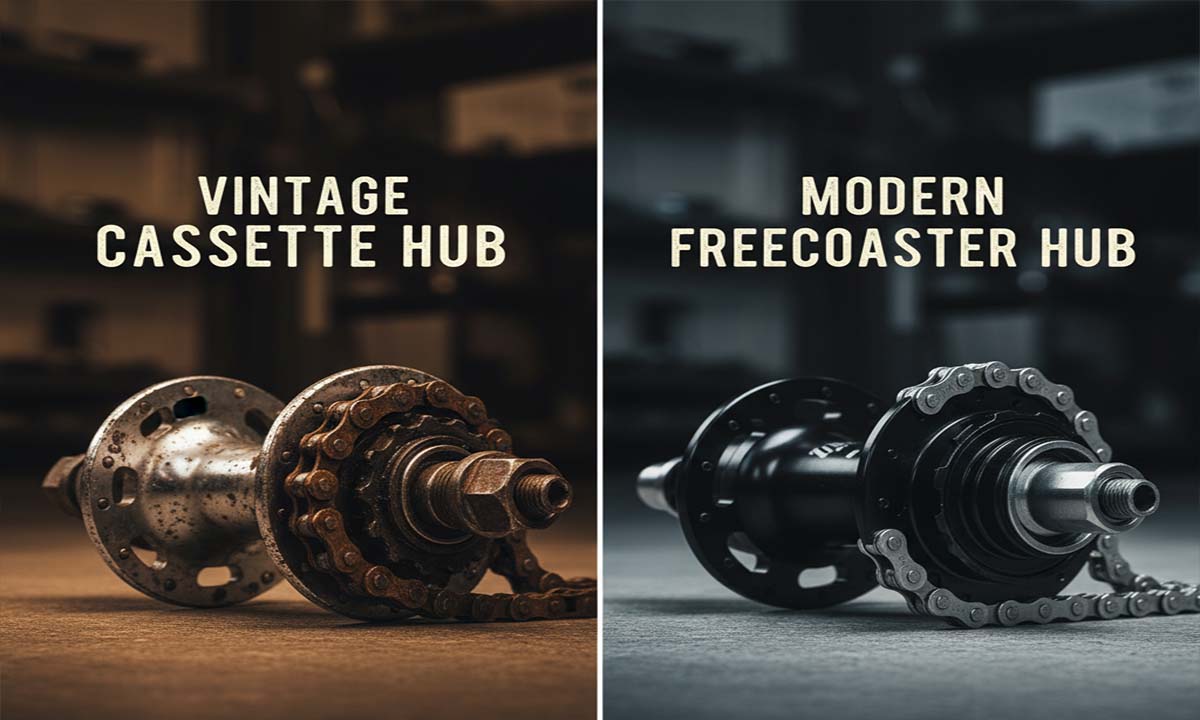
The cassette hub has been a long-standing standard in BMX riding communities worldwide. Its internal ratchet mechanism uses small metal pawls that lock into place whenever the rider pedals forward. When the rider coasts, the pawls move away from the ratchet ring and produce a clicking sound many riders recognize.
One of its biggest strengths is quick engagement. As soon as the rider pushes the pedals, the wheel follows almost instantly. That sharp response helps park riders who need fast speed before transitions. For dirt jumpers in countries like the United States or Germany, this responsiveness helps them gain momentum for tall jumps. The direct feel between foot and bike gives a comforting sense of control, especially when precision matters.
Another advantage is weight. Cassette hubs are usually lighter than freecoasters, which benefits tricks that involve lifting the bike, such as tailwhips and spins. Their simpler internal structure also makes them easier to maintain. Parts are widely available across bike shops internationally, keeping repair costs manageable.
Despite these strengths, cassette hubs can challenge riders who rely heavily on fakie tricks. When rolling backward, the rider needs to pedal backward continuously. This can disrupt balance and limit trick creativity, especially for beginners developing their technique. Street riders in areas like Japan, Brazil, and Eastern Europe often look for smoother fakie movement, which leads them toward freecoaster setups.
Understanding the Freecoaster Hub
The freecoaster hub changed the way many street riders approach technical movements. Instead of relying on pawls, it uses a clutch system. This mechanism allows the wheel to move backward without forcing the pedals to turn. Riders in major BMX street hubs such as Barcelona, Seoul, and Los Angeles often take advantage of this freedom to refine complex fakies and transitions.
The biggest benefit is the comfortable backward roll. Without the need to pedal backward, riders can focus entirely on balance and direction. It allows longer fakie lines and smoother exits from tricks like grinds or manuals. This style has become popular in many global scenes where technical riding is part of everyday practice.
The quiet movement is another feature some riders appreciate. Without clicking, the bike produces a softer sound. This calm feel appeals to those who ride in quiet neighborhoods, public plazas, or nighttime sessions where they want minimal noise.
However, freecoasters have slack. This is a small delay before the hub engages when the rider pedals forward again. For riders used to fast reactions, the delay takes practice to master. Acceleration before a jump or sharp obstacle may require slightly earlier preparation. This difference matters to riders performing fast movements in skateparks worldwide.
Freecoaster hubs are also heavier and more complex. Their internal clutch system requires regular cleaning and lubrication. Riders who travel or practice daily may need more maintenance time. Replacement parts can also cost more depending on location, especially in regions where BMX components are less common.
Choosing Between a Cassette and a Freecoaster
There is no single choice that works for everyone. Riders at different skill levels, locations, and riding styles have their own preferences. Understanding how each hub behaves helps riders make a choice that supports their growth.
For Street and Technical Riders
Street riding scenes across the world, from London to Manila to New York, often highlight creativity, balance, and precision. Fakie tricks play a huge role here. Riders who frequently work on these movements benefit from a freecoaster because it removes unnecessary pedal movement. Grinds, spins, and ledge tricks often flow better with backward movement that does not rely on pedaling. Many professional street riders globally use freecoasters for this reason.
For Park, Dirt Jump, and Race Riders
Park riders prioritize stability and speed. Dirt jumpers need strong bursts of power. BMX racers require every bit of acceleration they can get. In these riding styles, the cassette hub’s quick engagement helps in gaining speed at the right moment. Riders in competitive circuits across North America, Europe, and Australia often rely on cassette hubs for dependable performance.
Budget and Maintenance Considerations
Cost influences many riders’ decisions. Cassette hubs tend to be more affordable. Their parts are common and easy to replace in bike shops around the world. Repairs are usually simple enough for riders to handle on their own.
Freecoasters cost more because of their specialized internal parts. Maintenance can be more detailed, requiring regular cleaning and occasional part replacement. Riders who travel or practice daily may need more maintenance time. Understanding expert bike maintenance is crucial for freecoasters to ensure longevity. Replacement parts can also cost more depending on location, especially in regions where BMX components are less common.
Weight and Durability
Weight affects how the bike feels during tricks. Cassette hubs are lighter, giving riders improved control during quick maneuvers. Freecoasters weigh more due to their internal construction.
Durability varies based on model and brand. High-quality cassette hubs are known for long life. Freecoasters, while sturdy, contain more moving parts, which can lead to wear over time if not properly maintained. Recent improvements in global manufacturing, however, have made modern freecoasters far more reliable than older models.
Personal Preference and Bike Feel
Beyond technical features, personal comfort plays a major role. Some riders prefer the sharp and direct reaction of a cassette hub. Others enjoy the relaxed feel of a freecoaster. Testing both options at a local bike shop or borrowing a friend’s bike offers valuable insight into what feels right.
Many international BMX communities recommend trying each hub before making a decision. Riding conditions, terrain type, and the style of local riders also influence what setup works best.
Technological Developments Around the World
Manufacturers continue improving both hub types. Cassette hubs now offer higher engagement points and stronger materials. Freecoasters have improved clutch systems, adjustable slack, and more durable shells. These advancements come from engineering work across Europe, Asia, and North America, where BMX manufacturing remains innovative and competitive. For a deeper dive into the mechanics, exploring the general principles of bicycle hub engineering can provide valuable context.
Finding the Right Hub for Your Riding Style
The best hub is the one that strengthens your riding experience. Understanding how each type works helps you make a choice that supports your growth and fits your style. Whether you spend most of your time in a busy urban plaza, a smooth indoor park, a dirt course, or a racing track, choosing a hub that matches your goals creates a better and more enjoyable ride.
Related Post
Plastic vs Metal Pegs for Street and Park Riding
Plastic vs Metal BMX Pegs: Choosing the Right Setup for Your Riding Style Selecting the [...]
Left Side Drive vs Right Side Drive Explained
Every BMX rider knows that small mechanical details can shape the entire riding experience. The [...]